Public media guide
Pinterest Video Downloader: Save Public Pins the Right Way
A practical pinterest video downloader guide for checking public Pinterest links, comparing available formats, and saving media responsibly when your use is authorized.
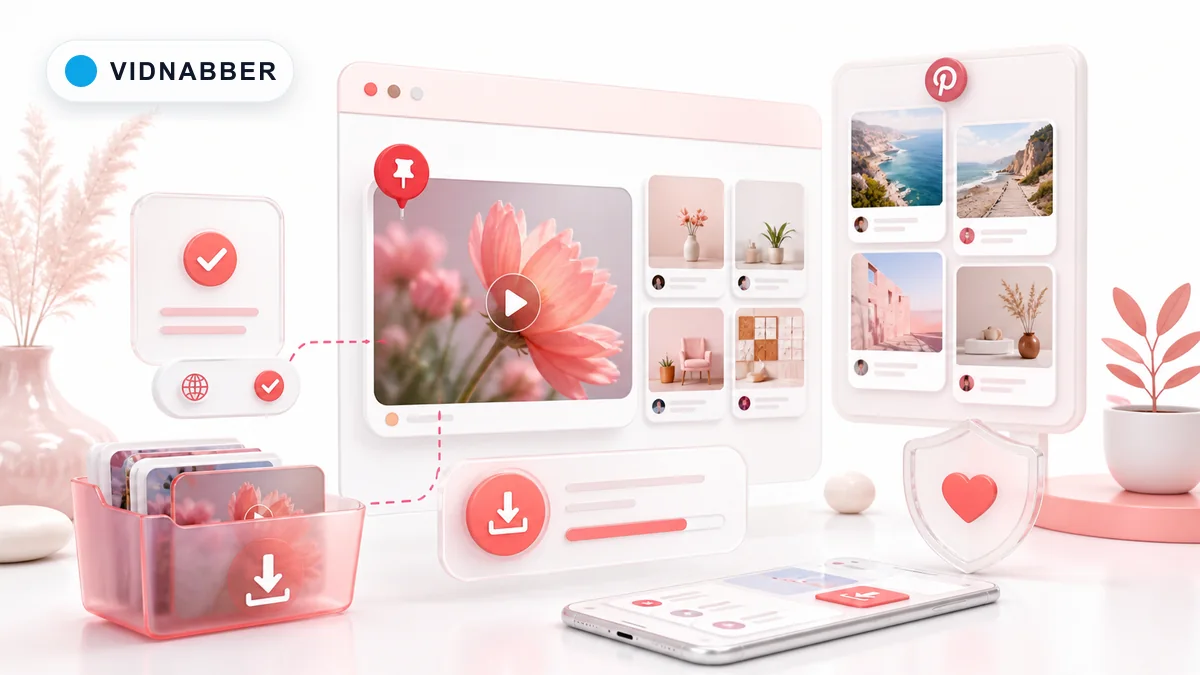
A pinterest video downloader workflow works best when you start with a public page that exposes normal video playback. This guide explains how to inspect the link, understand the format choices Vidnabber can detect, and choose an output that fits your device or editing workflow.
Use this page only for content you own, have permission to save, or may lawfully access. Public links are easier to analyze because the downloader can check the source without account access, private pages, paid content, or technical protection workarounds.
Every Pinterest link can behave a little differently. Some pages provide a single combined file, some expose separate audio and video streams, and some do not provide a downloadable media source at all. A calm review of the detected options helps you pick the best file without guessing.
A good pinterest video downloader habit is to decide the purpose before selecting a format. If you only need quick offline viewing, a compact file may be enough; if you plan to edit, present, or archive the media, a higher-quality option with clear source notes is usually easier to manage later.
What this pinterest video guide helps you check
Most people using a pinterest video downloader need a clear answer to three questions: whether the public link can be read, which media formats are available, and which option is safest for their device. Vidnabber keeps that process focused by showing detected choices before the browser download starts.
- Public Pinterest links are the most reliable starting point because they can usually be opened in a normal browser.
- Format availability depends on the original source, so the same platform can return different results for different posts.
- The best option is usually the file that includes the quality, audio, and format support you actually need.
Responsible public-link workflow
Downloader pages should make permissions clear. Before saving any video, confirm that the content is yours, licensed, permission-based, or otherwise lawful for your intended use. That simple check keeps the workflow useful for creators, students, researchers, editors, and everyday users without encouraging misuse.
- Do not use the tool to access private, paid, login-only, or restricted media.
- Do not try to bypass watermarks, DRM, regional restrictions, or platform controls.
- Keep attribution, license terms, and creator rights in mind when you store or reuse media.
How to review formats before saving
A clean pinterest video downloader flow should show useful output details before asking you to download. Look for the file type, quality label, whether audio is included, and any source note that explains how the media was detected.
- Paste a public Pinterest URL into the analyzer.
- Wait for Vidnabber to list the available output choices.
- Compare MP4 or WebM options and choose the one that fits your device.
- Start the browser download only after you know which file you are selecting.
Quality, audio, and device fit
Higher quality is not always the best choice. A large HD file can be useful for editing, while a smaller file may be easier to send, store, or play on a phone. Audio-focused pages may show lighter options that are better for listening, transcription, or offline reference.
- Pick HD when you need clearer visuals for editing or presentation work.
- Pick a smaller option when storage, speed, or mobile playback matters more.
- Check whether the selected video includes audio before you save it.
- For audio pages, prefer the format that works best in your player or editing app.
Troubleshooting when a link fails
If a public Pinterest URL does not return a downloadable option, the source may be limiting playback, serving region-specific media, using a format that cannot be exposed directly, or requiring account access. Try opening the link in a private browser window first; if it cannot play there, Vidnabber will usually have the same limitation.
- Confirm that the URL opens publicly without logging in.
- Use the direct post, clip, reel, or media page instead of a profile or feed URL.
- Try another browser-visible public link if the first one has no detected media.
- Respect unsupported results instead of forcing access to restricted content.
Practical examples for pinterest video saves
A pinterest video downloader workflow is most useful when you already know why the file is needed. Common safe uses include saving your own idea pin for a product folder, reviewing a public tutorial for reference, or keeping a licensed creative clip with campaign notes. In each case, the goal is not to bypass the source platform; it is to keep an accessible copy of public media that you are allowed to store, review, or reuse under the right terms.
- Use the public Pinterest page as your source of truth before saving anything.
- Write down why the pin video is being saved so future use stays clear.
- Keep the original link with the downloaded file for attribution and later review.
- If permission is unclear, do not download until the owner, license, or platform terms make the use acceptable.
How to organize downloaded files after saving
After the browser download starts, give the file a useful name and keep enough context to understand it later. A small naming routine helps prevent confusion when you have multiple qualities, audio-only versions, or clips from different platforms. For this topic, useful notes often include board name, creator, topic, and intended use.
- Rename the file with the Pinterest source and a short topic description.
- Store HD, compact, and audio-only outputs in separate folders when you save more than one version.
- Keep a text note with the source URL, permission details, and the date you saved the media.
- For video, note whether the file is for viewing, editing, archiving, or presentation use.
Format & Use Table
| What to check | Why it matters | Best practice |
|---|---|---|
| Public Pinterest link | Allows normal browser playback to be inspected | Use a source page that opens without special access |
| MP4 or WebM | Shows which file types the source actually exposes | Choose the format your device or editor supports |
| Audio included | Some video sources separate audio and video streams | Select a combined option when you need sound |
| File size and quality | Higher resolution can take longer to save and store | Balance quality with speed, storage, and playback needs |
| Permission to save | Media rights stay with the owner or platform terms | Save only content you own, can access lawfully, or have permission to use |
Step-by-Step Workflow
Copy the public Pinterest URL from the source page or app.
Paste the link into Vidnabber and confirm the terms/privacy checkbox.
Analyze the link and wait for the available output options.
Review file type, quality, audio availability, and source notes.
Choose the output that matches your device, storage, or editing needs.
Save the file only when your intended use is authorized and lawful.
Frequently Asked Questions
Is pinterest video downloader supported for every link?
No. It works best when a public Pinterest URL exposes compatible media streams. Private, removed, paid, login-only, or protected content may not work.
What formats can appear for pinterest video downloader?
Detected formats can include MP4, WebM, MP3, or M4A-style options depending on the source. Not every link provides every format or quality.
Can I use the saved file commercially?
Only if you own the content, have permission, or have another lawful basis for that use. When in doubt, ask the rights holder.
Why does one Pinterest link show more options than another?
Each public page can expose media differently. The uploader settings, platform delivery method, available audio streams, and browser playback source can all affect which formats Vidnabber can detect.
Which MP4 or WebM option should I choose?
Choose the format that works with your device and purpose. HD is helpful for editing or larger screens, while smaller files are often better for quick viewing, sharing, or mobile storage.
Should I save every available video quality option?
Usually no. Pick the option that matches your actual need. A compact file is easier to store and move, while a higher-quality file is better when you need editing headroom or clearer playback on larger screens.
How should I keep track of the original Pinterest source?
Keep the source URL beside the downloaded file, either in the file name, a notes document, or your project folder. This makes attribution, permission checks, and future review much easier.